
Powered By



Between 20 percent and 40 percent of people with Parkinson’s disease (PD) experience hallucinations or delusions. These symptoms can be challenging for those living with Parkinson’s as well as for their loved ones and caregivers.
Understanding the causes of hallucinations and delusions in Parkinson’s can help you recognize them more easily. Read on to learn how different factors may play a role in causing hallucinations or delusions.
Sign up to view the results!
 Continue with Facebook
Continue with Email
Continue with Facebook
Continue with Email
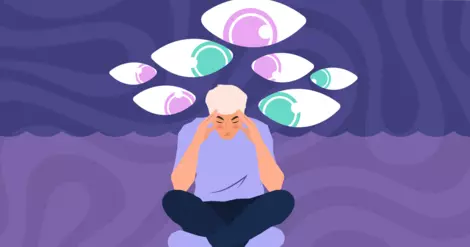
There are some important differences between hallucinations and delusions. A hallucination is when you sense or experience something that isn’t real.
Different types of hallucinations include:

Delusions, on the other hand, are irrational beliefs that aren’t based on reality. Delusions can lead to jealousy or paranoia, or they can make someone believe they have special powers.
Both hallucinations and delusions are considered forms of psychosis. Psychosis is a term for a range of symptoms of the mind that make it hard for people to distinguish what’s real from what’s not. Psychosis often starts with behavior that seems unusual or out of character and may be a sign of a problem.
It’s not always possible to know exactly what’s causing a hallucination or delusion. But understanding the potential causes can help identify treatment options. This may also improve the quality of life for anyone experiencing these symptoms.
Hallucinations and delusions may be symptoms of Parkinson’s disease psychosis (PDP). This is a neuropsychiatric condition, meaning it affects both the central nervous system (CNS) and behavioral and mental functions. Doctors believe PDP is caused by changes in brain chemicals and receptors.
Researchers think PDP may be either an unwanted side effect of medication or a symptom of Parkinson’s disease progression.
Dopamine is a chemical that regulates many functions in the body. This includes movement, cognition, behavior, memory, and mood. Parkinson’s causes neurons (nerve cells) that produce dopamine in the brain to die off.
The loss of dopamine in people with Parkinson’s can cause symptoms that affect movement, motor functioning, and cognitive health. To treat these symptoms, people with Parkinson’s are often prescribed dopamine therapy.
Dopamine therapy medications, such as the combination of carbidopa and levodopa, can help people with Parkinson’s. But they also create a risk of boosting dopamine levels too much. Increased levels of dopamine can cause unwanted side effects. These include possible changes in behavior, hallucinations, or delusions.
Other Parkinson’s drugs that stimulate dopamine activity in the brain include amantadine and anticholinergic drugs. These reduce motor symptoms and involuntary muscle movements and dyskinesia (spasms). Researchers have also linked Parkinson’s psychosis to dopamine imbalances caused by these drugs.
“I had several months of hallucinations, delusions, confusion, and severe imbalance, all due to a medication I was taking for my dyskinesia. I am off of it now and doing much better,” a MyParkinsonsTeam member said.
“I had hallucinations years ago with amantadine, but my doctor reduced the dosage, and they stopped,” said another member.
One member described how they discovered their husband’s medication was causing hallucinations: “We drastically reduced amantadine (given for dyskinesia) and his carbidopa, and his hallucinations stopped. Work with your neurologist to make sure your meds are still right for you.”
Some reports have also shown that hallucinations can be a symptom of pramipexole overdose. Pramipexole is a medication for movement disorders in Parkinson’s.
A member described a loved one’s experience with pramipexole. “He was on it for 10 years or so with no issues until the death of his wife,” they wrote. “After her passing, he started having all kinds of increasing hallucinations and delusions. We took him off it, and within two weeks, all hallucinations were gone.”
Hallucinations can be a side effect of drugs used to treat other health conditions that may develop alongside Parkinson’s. If you or a family member are experiencing hallucinations or delusions, it’s important to review all current medications. One drug could be causing the symptoms, or it could be a combination of medications. In some cases, depending on what condition is being treated, it may be necessary to change medications, dosages, or the times medications are taken.
Some types of medications — aside from Parkinson’s treatments — that may cause visual hallucinations include:
“My hallucinations were caused by my blood pressure medication. I just cut back on that, and problem solved,” a MyParkinsonsTeam member said.
Always get medical advice before stopping or changing a medication.
Many studies have looked at the prevalence and incidence (the total number of existing cases and the number of new cases) of cognitive impairment in Parkinson’s disease. Recent figures estimate that about 30 percent of people with Parkinson’s develop dementia within 10 years of diagnosis.
As Parkinson’s disease progresses, the rate of hallucinations and delusions typically increases. Neurology research suggests that hallucinations may be linked to a shorter progression toward dementia. Parkinson’s dementia may include nonmotor symptoms such as:
One MyParkinsonsTeam member shared their husband’s experience. “My husband has PD dementia. He suffers from delusions and some paranoia,” they said. “The past week or so has been difficult. He believes the delusion so strongly that it keeps him stressed. At times, he won’t eat, and he has trouble sleeping.”
Paranoid and persecutory delusions (false beliefs that others want to harm you) are common forms of psychosis and can be very upsetting. Other problems, such as eye problems, light sensitivity, sleep disorders, and depression, are also common in people with Parkinson’s. These issues may be linked to hallucinations and delusions.
Infections and conditions that can resemble Parkinson’s may cause psychotic symptoms. If you or someone you’re caring for is experiencing hallucinations or delusions, your healthcare provider may want to test for other health conditions.
Infections that aren’t related to Parkinson’s disease can also cause psychosis with symptoms such as hallucinations and delusions. Urinary tract infections in particular are known to cause psychotic symptoms in older people.
One MyParkinsonsTeam member said, “I just woke up with a urinary tract infection accompanied by hallucinations.”
Pneumonia and other conditions that restrict oxygen, such as chronic obstructive pulmonary disease (COPD), can also cause psychotic symptoms in older people.
Alzheimer’s disease and Lewy body dementia are neurodegenerative disorders. This means they slowly damage the brain and central nervous system over time. As brain function declines, people may develop psychotic symptoms, such as hallucinations and delusions.
Alzheimer’s and Lewy body dementia usually affect older adults. Some of their symptoms overlap with those seen in Parkinson’s disease. Cognitive and psychotic symptoms in both conditions can look very similar to hallucinations and delusions experienced by people with Parkinson’s.
If you or a loved one experience Parkinson’s hallucinations or delusions, it’s important to talk with a neurologist, especially if these symptoms are worsening. In the early stages of psychosis, some people find it helpful to write down what they’re experiencing. This can make it easier to clearly describe your symptoms to your healthcare provider.
Once your doctor understands your symptoms, they can suggest ways to manage hallucinations and delusions. This may include adjusting your current medications or prescribing additional drugs to treat your psychosis symptoms.
Treating symptoms of Parkinson’s psychosis can be challenging, but help is available. Your doctor can order tests and do evaluations to better understand what’s causing the symptoms and decide on the most appropriate treatment options.
On MyParkinsonsTeam, people share their experiences with Parkinson’s, get advice, and find support from others who understand.
Have you and your doctor discussed your risk factors for hallucinations or delusions? Let others know in the comments below.
Get updates directly to your inbox.


What is the difference between hallucinations and plain old dreaming? I dream a lot but I think I always have.


 Continue with Facebook
Continue with Email
Continue with Facebook
Continue with Email
Continue with Facebook
Continue with Email
Continue with Facebook
Continue with Email
Become a member to get even more





 Join
Join

 Your Privacy Choices

This is a member-feature!
Sign up for free to view article comments.
Mark577 You are lucky to be able to do it without missing a beat of your regular activities, I totally destroyed the end cabinet of our tv stand,when the dr. added25mg of metoprolol.
We'd love to hear from you! Please share your name and email to post and read comments.
You'll also get the latest articles directly to your inbox.