... This is partly due to greater levodopa bioavailability, meaning their bodies tend to retain higher levels of the medication.Talk to Your DoctorLiving with Parkinson’s brings a wide range of motor and nonmotor symptoms that can deeply affect daily life, both for individuals and their loved ones. ...
Symptoms of Parkinson’s
... This is partly due to greater levodopa bioavailability, meaning their bodies tend to retain higher levels of the medication.Talk to Your DoctorLiving with Parkinson’s brings a wide range of motor and nonmotor symptoms that can deeply affect daily life, both for individuals and their loved ones. ...
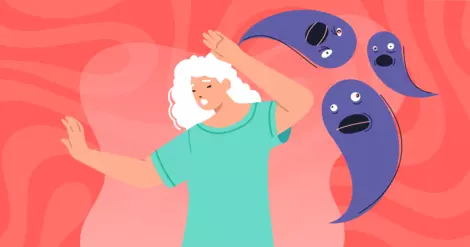
... Delusions May Lead to Anxiety or Agitated BehaviorA person experiencing delusions may be anxious, fearful, or very agitated. Caregivers explain how delusions impact their loved ones’ behavior: “He believes the delusion so strongly that it keeps him stressed. At times he won’t eat, and he is having trouble sleeping.” ...
Delusions vs. Hallucinations: 9 Differences To Recognize in Parkinson’s
... Delusions May Lead to Anxiety or Agitated BehaviorA person experiencing delusions may be anxious, fearful, or very agitated. Caregivers explain how delusions impact their loved ones’ behavior: “He believes the delusion so strongly that it keeps him stressed. At times he won’t eat, and he is having trouble sleeping.” ...
... Delusions can be harder to treat, as they may cause a person to mistrust their caregivers or resist taking medication. If you or a loved one with Parkinson’s experiences any hallucinations, delusions, or other symptoms of Parkinson’s psychosis, it is very important to tell your doctor. ...
... People with Parkinson’s may experience symptoms of the condition in different ways.Ethnicity also may have an influence. ...
What Causes Parkinson’s?
... People with Parkinson’s may experience symptoms of the condition in different ways.Ethnicity also may have an influence. ...
... A higher incidence of head injuries in men compared to women may also contribute to increased Parkinson’s risk. Biological Sex Differences in Symptom PresentationThere is a large amount of variability in how people develop Parkinson’s. Men and women on average tend to exhibit different symptoms of Parkinson’s, with different levels of severity. ...
Why Are Men More Likely To Develop Parkinson’s?
... A higher incidence of head injuries in men compared to women may also contribute to increased Parkinson’s risk. Biological Sex Differences in Symptom PresentationThere is a large amount of variability in how people develop Parkinson’s. Men and women on average tend to exhibit different symptoms of Parkinson’s, with different levels of severity. ...
... Urinary incontinence (leaking pee) may also occur with Parkinson’s, but it’s less common. Urinating problems can be treated with medication and may need expert help from a bladder specialist.6. Problems With SexSexual problems are common among people with Parkinson’s, more often for men than women, according to the Parkinson’s Foundation. ...
7 Nonmotor Symptoms of Parkinson's Disease
... Urinary incontinence (leaking pee) may also occur with Parkinson’s, but it’s less common. Urinating problems can be treated with medication and may need expert help from a bladder specialist.6. Problems With SexSexual problems are common among people with Parkinson’s, more often for men than women, according to the Parkinson’s Foundation. ...
... “When we are out and about, we may often run into someone we know who knows I have PD. The question to me always is ‘How are you doing?’ No one ever asks my wife, ‘How are YOU doing?’ It’s as if caregivers have suddenly become invisible,” a member wrote. “So to all of you caretakers and caregivers, THANK YOU, THANK YOU, THANK YOU!! ...
8 Tips for Parkinson’s Caregivers
... “When we are out and about, we may often run into someone we know who knows I have PD. The question to me always is ‘How are you doing?’ No one ever asks my wife, ‘How are YOU doing?’ It’s as if caregivers have suddenly become invisible,” a member wrote. “So to all of you caretakers and caregivers, THANK YOU, THANK YOU, THANK YOU!! ...
... In Ayurveda, Parkinson’s is called kampavata, from the Sanskrit “kampa,” meaning “shaking,” and vata, meaning “lack of muscular movement.” ...
... A healthcare provider can help you understand the cause of hallucinations to see if medication changes or other treatments may help. ...





 Join
Join


 Your Privacy Choices